Print & Editorial
Tidal Atlas Research Book
A large-format research publication mapping changing coastlines through essays, charts, satellite imagery and field notes.
01 / At a glance
A quick summary for clients and collaborators.
What this project is about
A large-format research publication mapping changing coastlines through essays, charts, satellite imagery and field notes. The case study presents the design direction across publication architecture, map system, data spreads, image essays, print specification. This case study documents the brief, creative direction, visual system, applications and production approach.
Scientific evidence, lived experience and map detail needed distinct voices without fragmenting the reading journey.
A tidal baseline rises and falls through the publication, controlling margins, captions, chapter openings and transparent overlays.
Publication architecture / Map system / Data spreads / Image essays / Print specification
Visual case study
Selected project work.
Large-format mockups follow the project context. Strategy, system and production details continue below.
Continue to project details ↓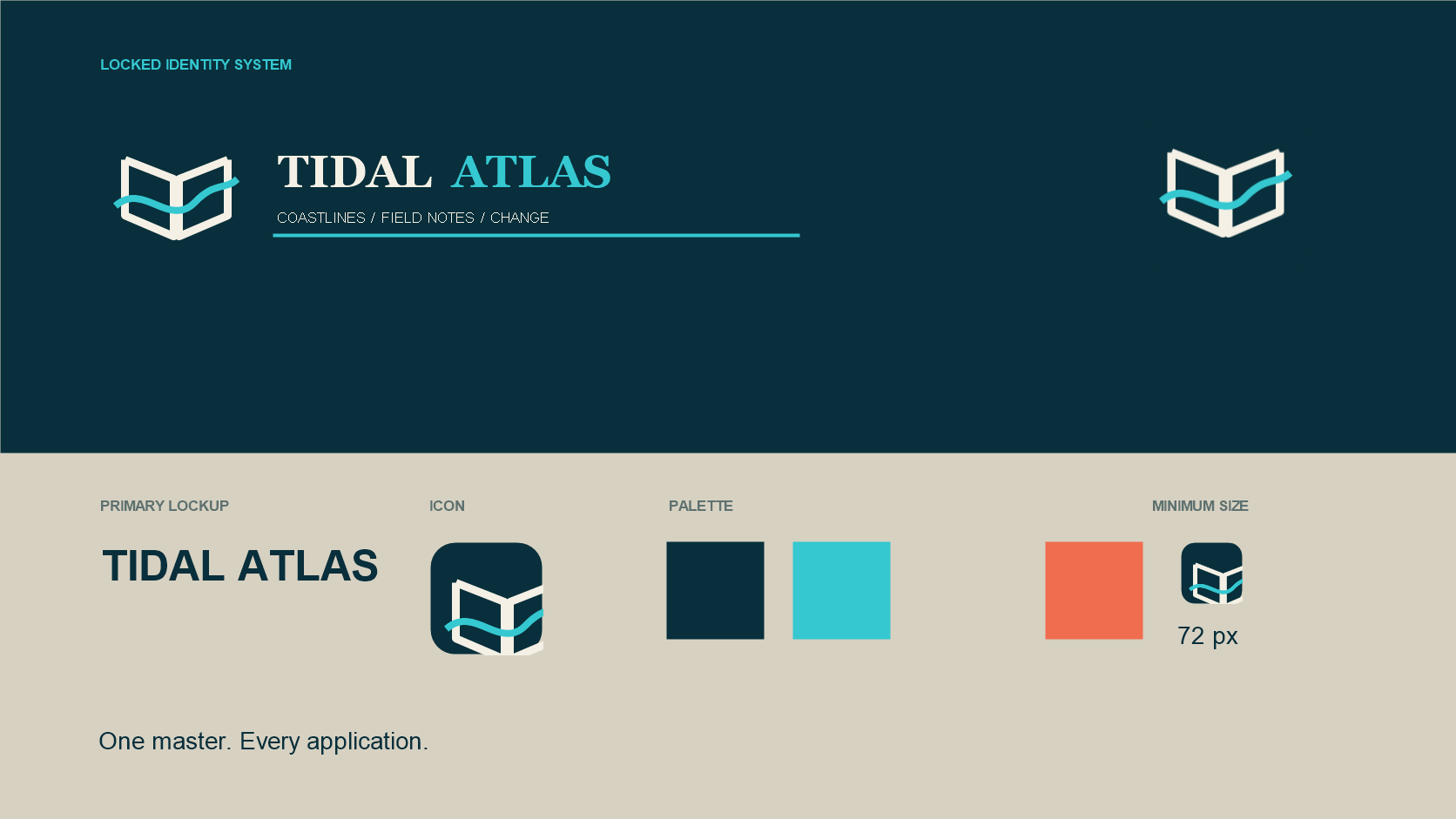
The Locked identity — one open-book tide symbol and one wordmark used unchanged throughout the publication system view presents the core Tidal Atlas Research Book mark and is used as a visual reference for consistent brand application.
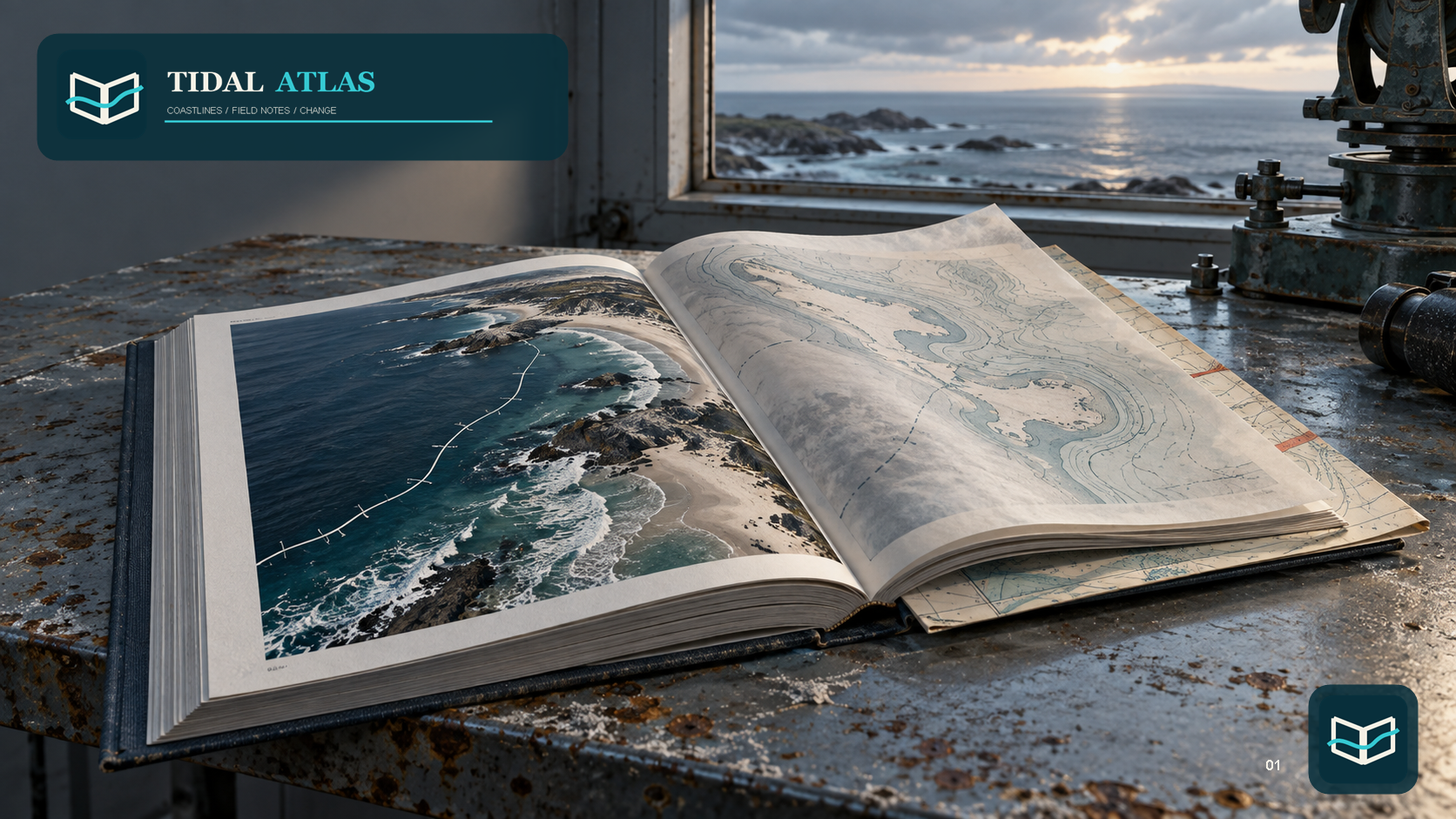
The Publication hero — field photography, mapping and a rising baseline meet in one readable research spread mockup is a promotional application used to build recognition and communicate the Tidal Atlas Research Book message clearly.
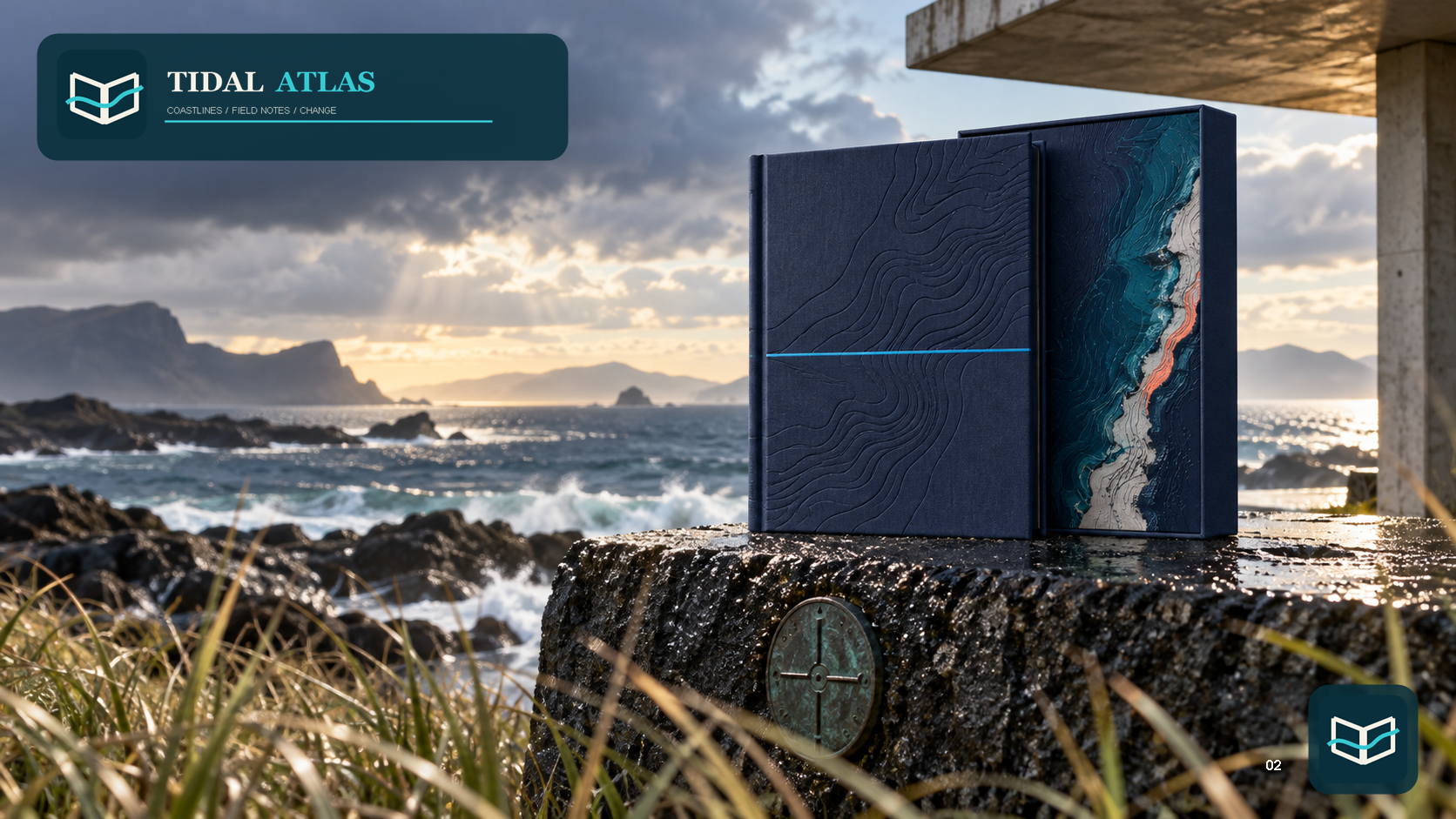
The Cover system — cloth, edge detail and a compact coastal marker make the atlas feel archival rather than decorative mockup is a production detail used to verify how Tidal Atlas Research Book reproduces through material, texture and finishing.
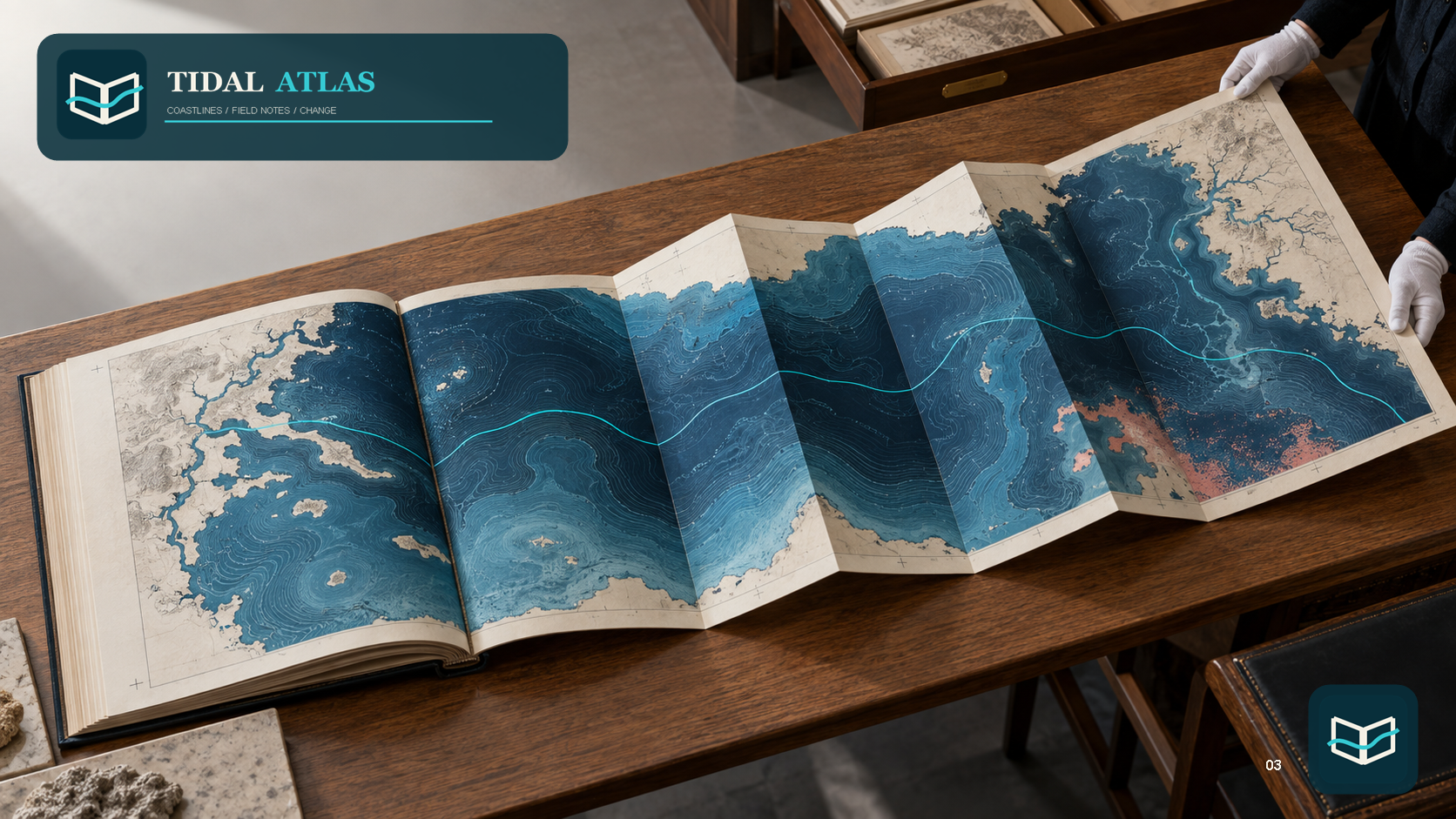
The Foldout map — the baseline expands into a shoreline-scale reading experience without losing orientation mockup is an information-design application used to help the Tidal Atlas Research Book audience understand important data quickly.
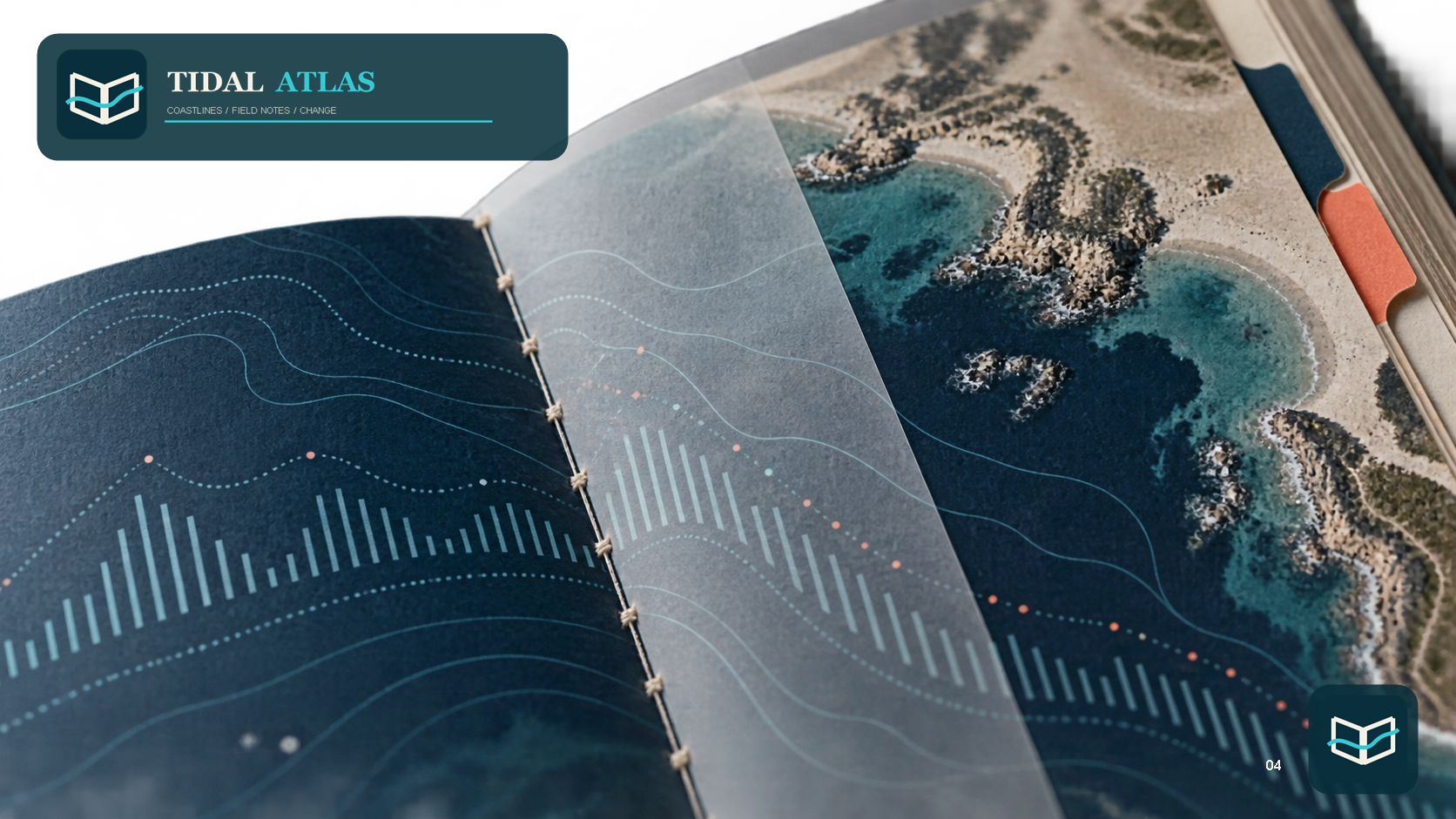
The Material detail — transparent overlays, map contours and evidence graphics reveal change through layered reading mockup is an information-design application used to help the Tidal Atlas Research Book audience understand important data quickly.
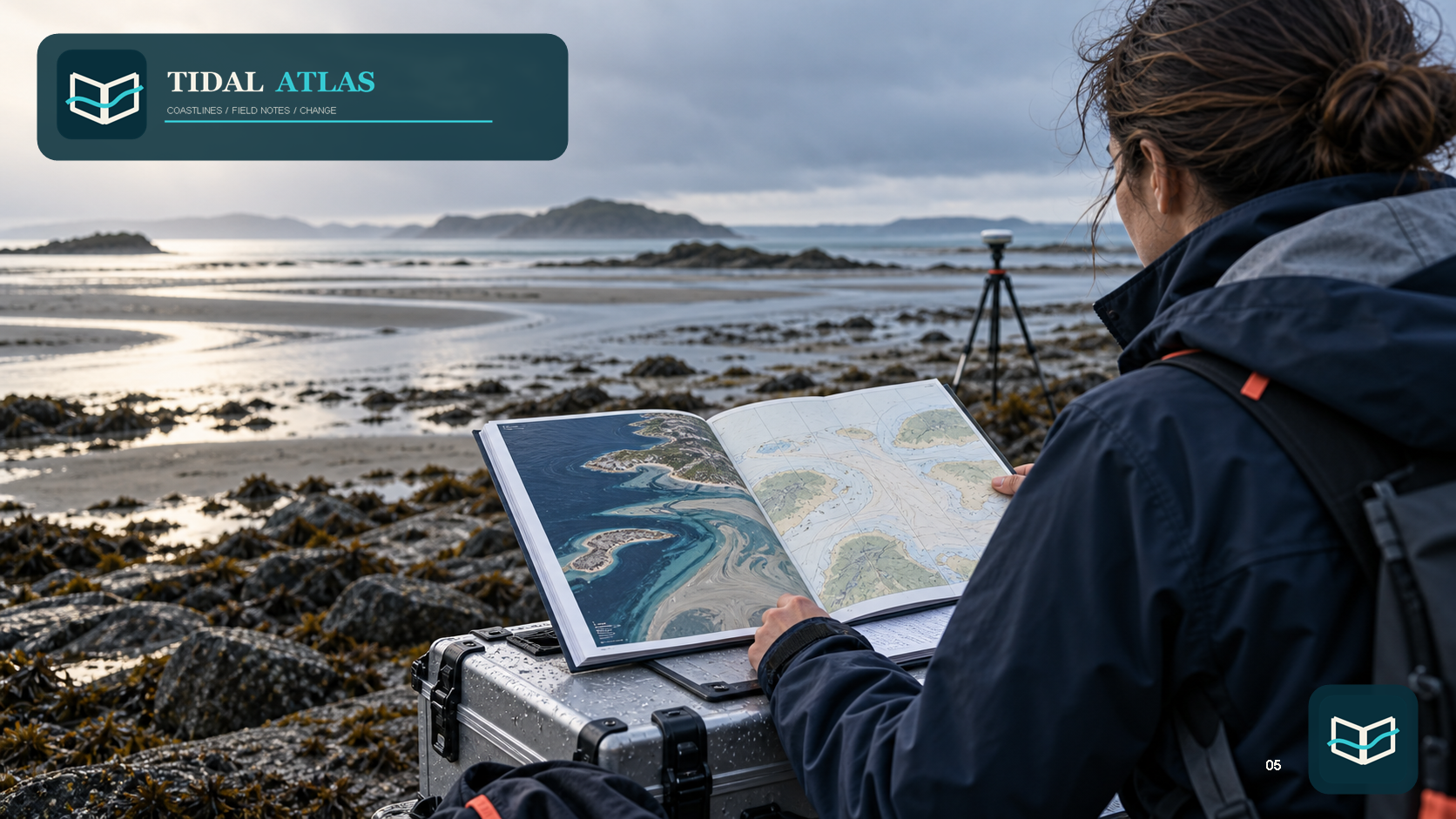
The Field use — the book supports real observation at a working distance, with equipment and coastline kept legible mockup demonstrates how Tidal Atlas Research Book guides, informs and creates recognition within a physical space or event.

The Reading room — long-form image essays feel calm and collectible in a quiet public research setting mockup presents a specific Tidal Atlas Research Book touchpoint and is used to demonstrate the identity in a practical real-world context.
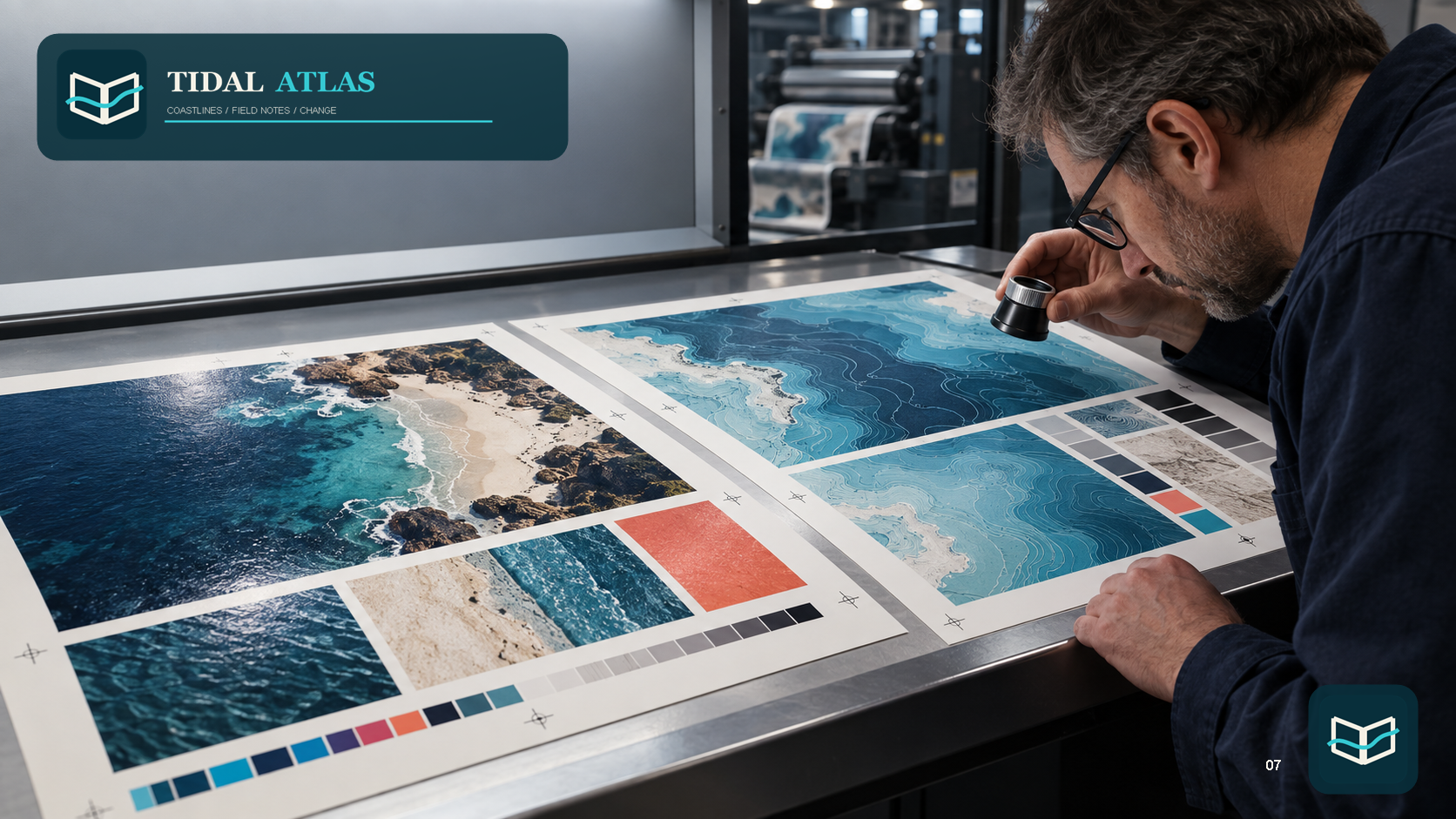
The Press check — paper, ink density and image balance are reviewed as production decisions, not styling props mockup presents a specific Tidal Atlas Research Book touchpoint and is used to demonstrate the identity in a practical real-world context.
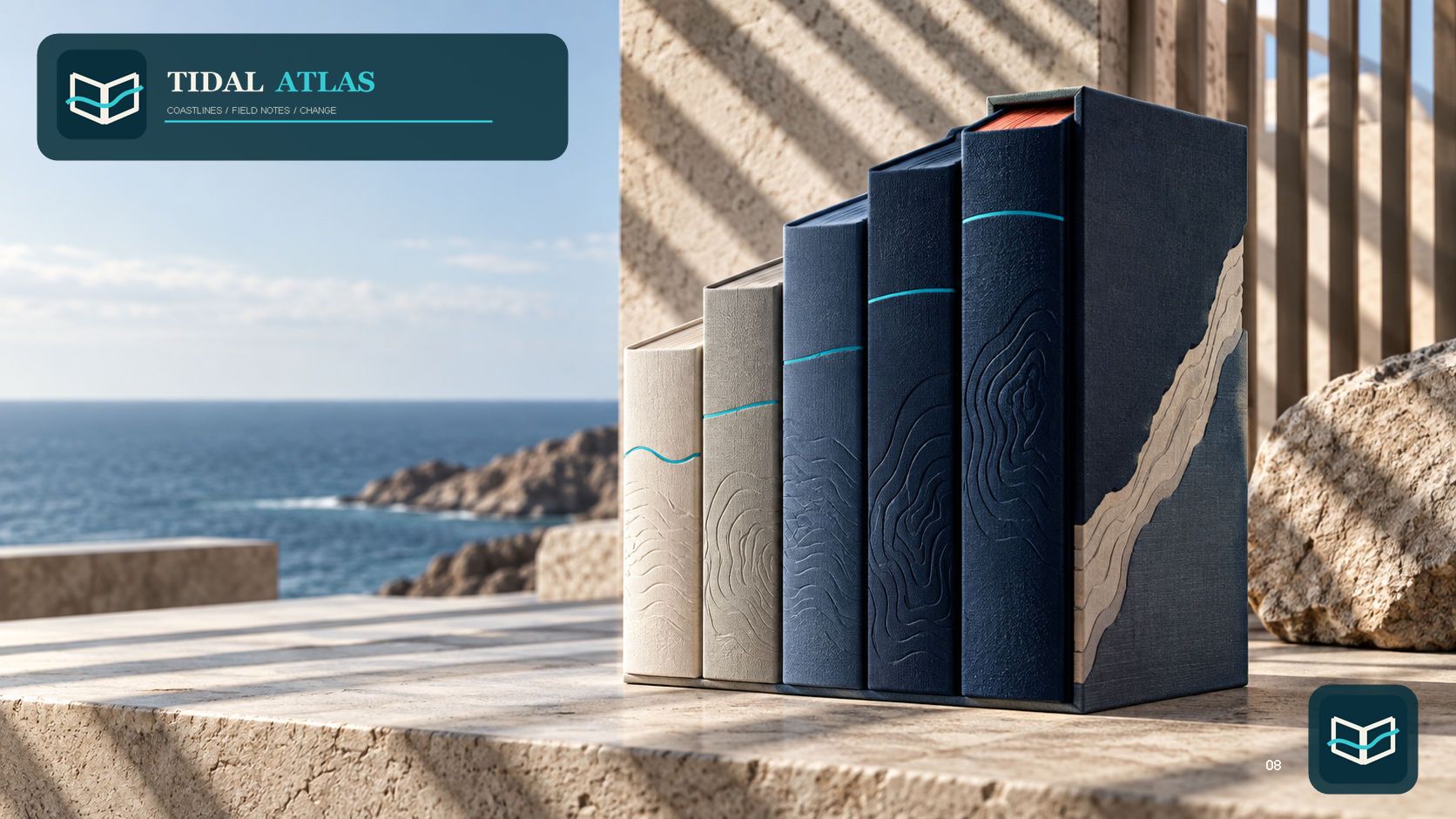
The Chapter system — five volumes use the same tidal baseline to create variation without fragmenting the family overview combines multiple Tidal Atlas Research Book touchpoints to demonstrate consistency across the wider visual system.
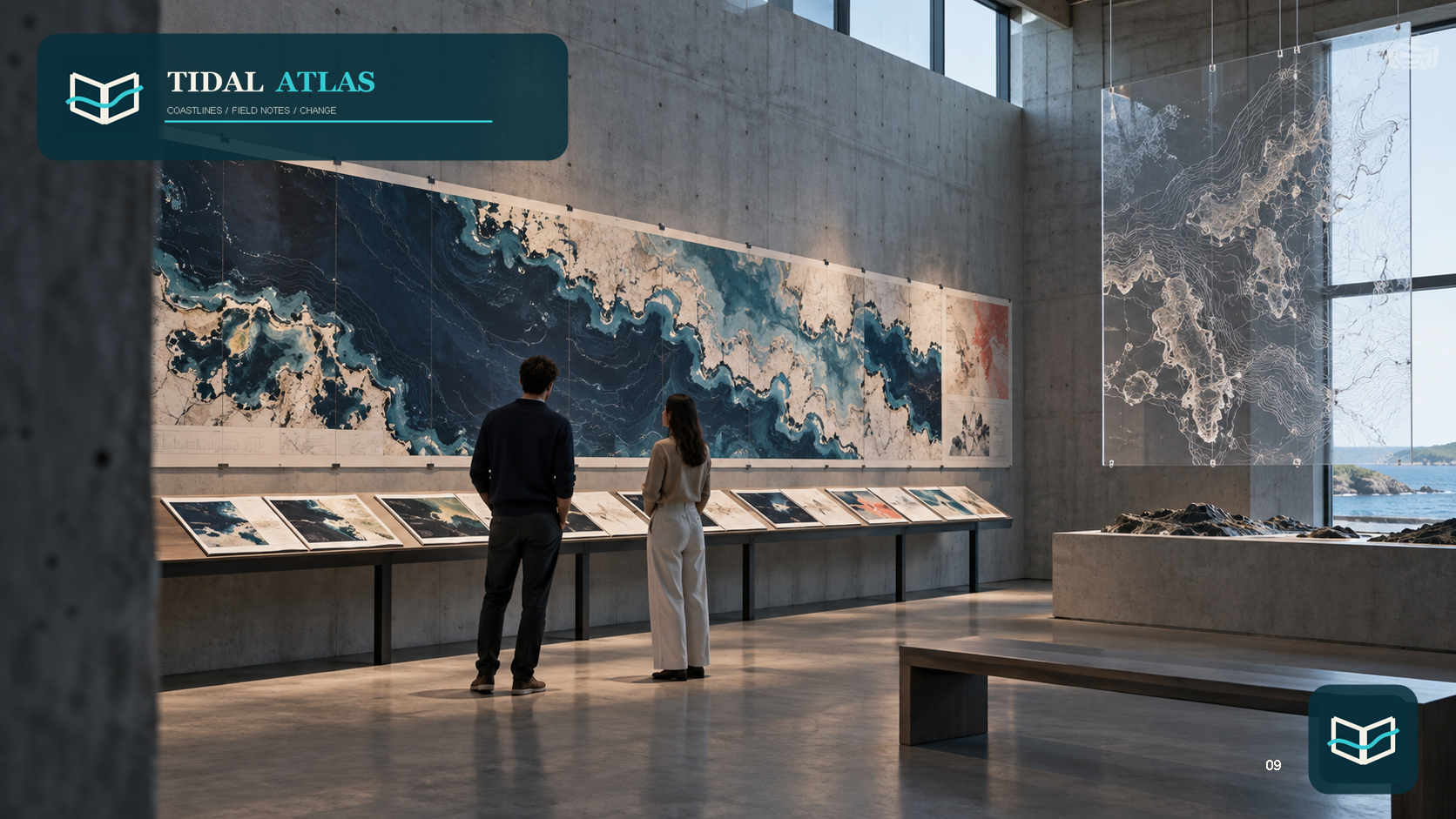
The Exhibition scale — publication maps and evidence translate into an immersive but restrained public installation mockup demonstrates how Tidal Atlas Research Book guides, informs and creates recognition within a physical space or event.
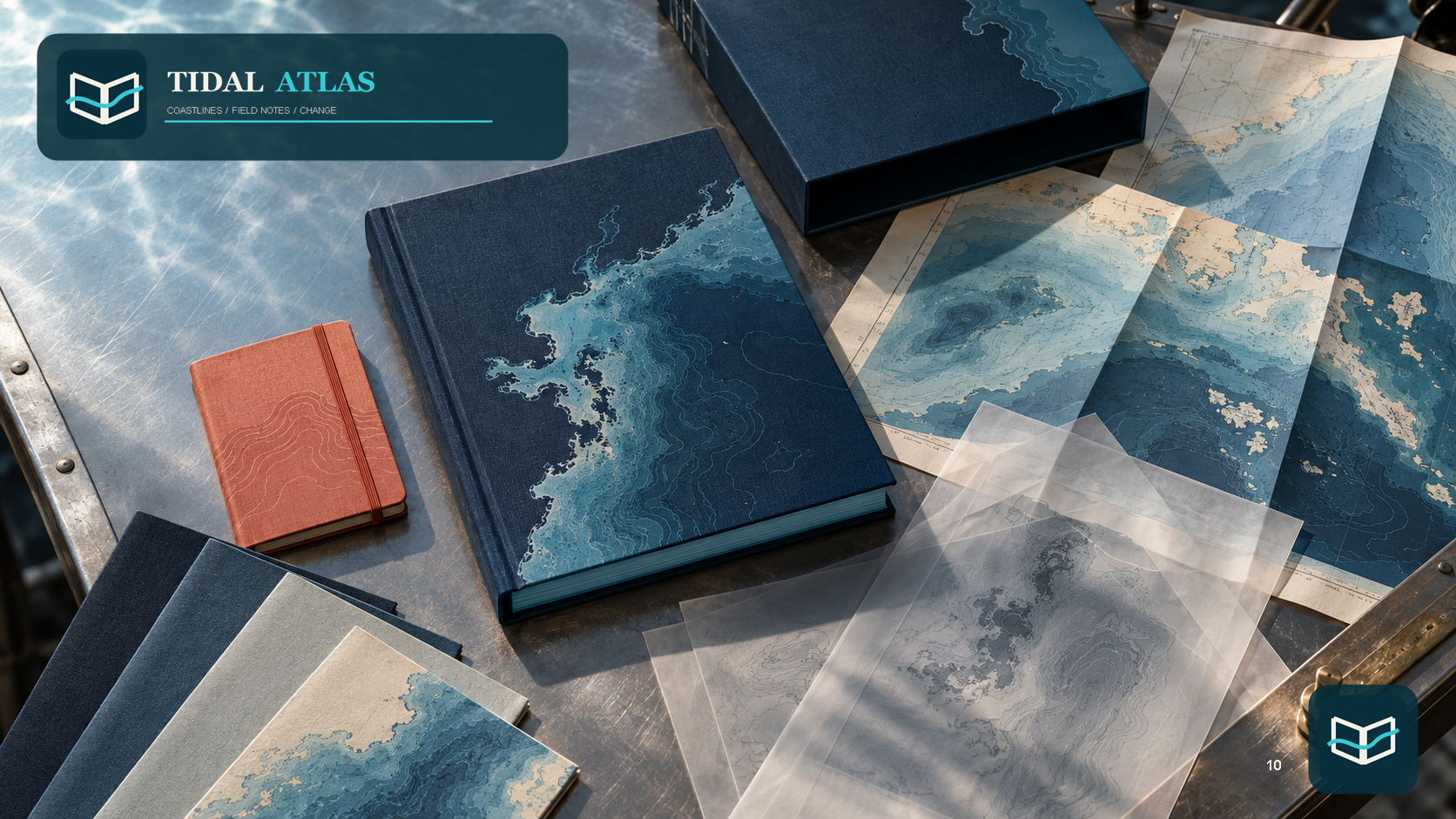
The Final family — atlas, foldouts, chapter books and field materials close as one coherent editorial system mockup demonstrates how Tidal Atlas Research Book guides, informs and creates recognition within a physical space or event.
02 / Brief
The challenge
Audience
- Decision-makers who need the offer to be understood quickly and trusted across several touchpoints.
- International B2B buyers, sales teams, executives and technical stakeholders who value structured, factual communication.
Objectives
- Create a distinctive print & editorial direction that communicates the offer within seconds.
- Show how one strategic idea can become a coherent system rather than a collection of unrelated mockups.
- Demonstrate production awareness and handoff quality expected by international in-house, agency and production teams.
- Make every application useful for its audience, format and stage in the communication journey.
Constraints
- Publication architecture must follow the same hierarchy and visual rules while respecting its own format.
- Map system must follow the same hierarchy and visual rules while respecting its own format.
- Data spreads must follow the same hierarchy and visual rules while respecting its own format.
03 / Creative direction
The design response
A tidal baseline rises and falls through the publication, controlling margins, captions, chapter openings and transparent overlays. The intended tone balances confidence with restraint: enough distinction to be memorable, but enough structure to feel credible across international commercial settings. References should be evaluated for strategic principles—hierarchy, rhythm, materiality and behaviour—not copied as surface style.
The core concept turns the project’s central subject into a repeatable visual rule. Each application should express the same idea through scale, sequence, crop or material rather than adding new decoration. The concept succeeds only if a viewer can connect the smallest digital asset with the largest or most detailed application.
04 / Design system
The visual system
Use a disciplined display-and-text pairing with a clear information hierarchy. Headline character supports the print & editorial idea; body copy remains neutral, highly legible and suitable for English and multilingual content.
Build a controlled primary palette around the ocean direction, supported by neutral and functional colours. Define RGB, CMYK and contrast-safe digital values before final artwork.
Use a modular grid with repeatable spacing, alignment and scale rules so communication remains recognisable from compact formats to long-form and large-scale applications.
Set explicit rules for crop, perspective, background treatment, subject scale and captioning. Imagery must clarify the message rather than act as generic decoration.
05 / Applications
What the project delivers
Editorial communication
A grid-led document family using master pages, paragraph styles, tables, captions, navigation and production specifications.
06 / Production & implementation
Designed to leave the portfolio and enter production
- Use InDesign master pages, paragraph and character styles, a baseline grid, linked assets, 3 mm bleed, PDF/X export and an output preflight checklist.
Files should use a consistent folder structure, version names, editable masters, linked assets, licensed font notes and export presets. Final public content must pass a permission and privacy check.
07 / Iterations
How I developed the work
- Round 01 — Audit the category, audience, competitors and common visual clichés; write the problem and positioning in one sentence.
- Round 02 — Explore at least three distinct conceptual territories in black and white before committing to typography or colour.
- Round 03 — Test the selected direction on the most difficult real formats, not only the hero image; remove rules that fail under pressure.
- Round 04 — Refine hierarchy, spacing, colour and imagery; run print, contrast, small-size and responsive checks where relevant.
08 / Deliverables & outcome
What the project includes
Project deliverables
- Publication architecture
- Map system
- Data spreads
- Image essays
- Print specification
- Creative-direction board and written rationale
Quality standard
- The audience can identify the offer, category and next action without an explanation from the designer.
- Applications look related because they share rules—not because the same mockup or decorative effect is repeated.
- A production, marketing or development colleague can continue the work from the documented files and specifications.
- Accessibility, privacy and output requirements are resolved before presentation polish.
Project outcome
Tidal Atlas brings together publication architecture, map system, data spreads, image essays, print specification in one coherent, presentation-ready design system.
International portfolio relevance
This case study demonstrates editorial design, information design, print production, cross-media consistency and production discipline for international design teams and clients.
Further development
Further development can extend the system through additional applications, production testing, responsive refinement and implementation detail.
Have a similar challenge?
Let's build something clear, useful and memorable.
Share your company, audience and required deliverables. I will help you identify the right design direction.